Greenhouse gas emission calculations for canteen waste disposal, whether through landfilling or feeding to pigs.

Canteen waste, often overlooked, contributes to greenhouse gas (GHG) emissions through various decomposition processes. Understanding the environmental impact of canteen waste is crucial for sustainable waste management practices. In this blog, we’ll delve into the calculations of GHG emissions from 1 Tonne Per Day (TPD) of canteen waste.

Why Calculate GHG Emissions? GHG emissions are a significant contributor to climate change. By quantifying emissions from canteen waste, we gain insights into its environmental impact, aiding in the development of effective waste management strategies and mitigating climate change.

Quantity of food waste / day 1000kg
Scenario 1: Food waste sent to piggeries
1) Food waste from factory premises is transported to piggeries at a distance of 40-60km from factories
2) Pigs consume the food waste and grow in size. Unlike cow dung, pigs dung releases very high amount of methane
3) Pigs typically consume 2-3 kg of food per day and are slaughtered when they are about 60-80kg in size
4) Considering a 1 tonner vehicle transporting waste with average 100 km run per day, it will consume about 10 litres of diesel
5) 1 litre of diesel emits 2.68kg of GHG. Per day the waste is transported, it amounts to 26.8 kg of GHG emission per day
6) No. of pigs that can be fed with 1000 kg of food waste is approximately 320 pigs
7) Amount of GHG emitted per pig in its lifetime is 2.5 – 3.5 metric tonnes of CO2E
Scenario 1: GHG Emissions per annum
1) Transporting of waste                 9,782 kg of CO2E
2) GHG Emissions of pigs (60 pigs)            9,60,000 kg of CO2E
Total            9,69,782 kg of CO2E
Scenario 2: Food waste composted within premises
1) Canteen food waste is primarly nitrogen rich material which is mixed with carbon rich material and composted 
2) Aerobic composting helps in nutrient recovery from the food waste and generates mostly CO2 and water vapour as by products
3) 40kg of carbon material is used to treat 200kg of canteen waste. This carbon material decomposes and provides organic carbon to soil along with nutrients (N, P, K, Ca, Mg, Zn, Cu, Mn etc)
4) It is estimated that 1kg of food waste generates 550 of CO2 during composting (60 days)
Scenario 2: GHG Emissions per annum
1) Transporting of carbon material                     536 kg of CO2E
2) CO2 emission during aerobic composting            2,00,750 kg of CO2E
Total            2,01,286 kg of CO2E
Savings in GHG Emissions due to composting            7,68,496 kg of CO2E per annum

To determine the greenhouse gas savings of composting 1000 kg of food waste versus sending it to a pig farm, we need to consider the emissions associated with each option.

Composting:
When food waste is composted, it undergoes decomposition in an aerobic environment, resulting in the production of carbon dioxide (CO2) and some methane (CH4) during the process. The exact amount of emissions can vary depending on composting methods, conditions, and the composition of the food waste. On average, composting food waste produces lower methane emissions compared to anaerobic decomposition in landfills.

Sending to a pig farm:
Transporting the 1000 kg of food waste to a pig farm located 60 km away incurs greenhouse gas emissions associated with transportation. The emissions depend on the mode of transportation (e.g., truck, van) and the fuel efficiency of the vehicle used. Additionally, there may be emissions related to pig farm operations, such as the handling of the food waste and the management of pig manure.

To obtain specific emission values for transportation and pig farm operations, it would be necessary to consider factors such as the type of vehicle used, fuel consumption, and the specific practices employed at the pig farm.

In general, composting food waste is considered a more environmentally friendly option as it can reduce methane emissions from landfills and promote the production of nutrient-rich compost that can be used for soil improvement. However, quantifying the exact greenhouse gas savings would require a detailed analysis considering the specific circumstances and factors involved in both composting and pig farm operations.

The amount of greenhouse gases emitted by a pig during its lifecycle can vary depending on various factors such as its diet, management practices, and waste management systems. However, on average, a pig can emit approximately 2.5 to 3.5 metric tons of carbon dioxide equivalents (CO2e) during its entire lifecycle, which includes the emissions from feed production, pig rearing, and manure management. It’s worth noting that these estimates can vary and may depend on regional and production-specific circumstances.

Burning 1 liter of diesel fuel typically releases around 2.68 kilograms of carbon dioxide (CO2) into the atmosphere. However, it’s important to note that the exact amount of greenhouse gas emissions from diesel combustion can vary based on factors such as the engine efficiency and the specific composition of the diesel fuel. This estimate is based on the carbon content of diesel fuel and the standard carbon-to-CO2 conversion ratio. Other greenhouse gases, such as methane and nitrous oxide, may also be emitted during diesel combustion, but their quantities are generally lower compared to CO2 emissions.

The amount of food waste required to feed a pig can vary depending on factors such as the pig’s size, age, and nutritional requirements. On average, a pig consumes around 2-4% of its body weight in feed per day.

Assuming an average feed conversion rate of 3% (pig’s weight to feed ratio), we can estimate the number of pigs that can be fed with 1000 kg of food waste daily.


Let’s calculate it:
Amount of food waste required per pig per day = Pig’s weight * Feed conversion rate
Assuming an average pig weight of 100 kg (for simplification):
Food waste required per pig per day = 100 kg * 0.03 = 3 kg
Number of pigs that can be fed = Total food waste / Food waste required per pig per day
Number of pigs that can be fed = 1000 kg / 3 kg ≈ 333 pigs
Therefore, approximately 333 pigs can be fed with 1000 kg of food waste every day. Keep in mind that this is an estimate, and the actual number may vary based on the specific circumstances and nutritional needs of the pigs.


The greenhouse gas emissions from aerobic composting of 1000 kg of food waste can vary depending on several factors, such as the composition of the food waste, the specific composting method used, and the duration of the composting process. However, aerobic composting generally results in lower greenhouse gas emissions compared to anaerobic decomposition in landfills.

During aerobic composting, microorganisms break down the organic matter in the presence of oxygen, primarily producing carbon dioxide (CO2) as a byproduct. Methane (CH4) emissions, which have a higher global warming potential than CO2, are typically minimal in aerobic composting due to the oxygen-rich conditions that inhibit methanogenic bacteria.

While it’s challenging to provide an exact emission value without specific details, on average, aerobic composting of food waste can result in CO2 emissions of approximately 550 grams per kilogram of composted waste. This estimate considers the carbon content of the food waste and the typical carbon-to-CO2 conversion ratio during decomposition.

It’s important to note that composting has additional environmental benefits beyond greenhouse gas mitigation, such as diverting waste from landfills, reducing odor and leachate production, and producing nutrient-rich compost that can be used to enhance soil health and fertility.
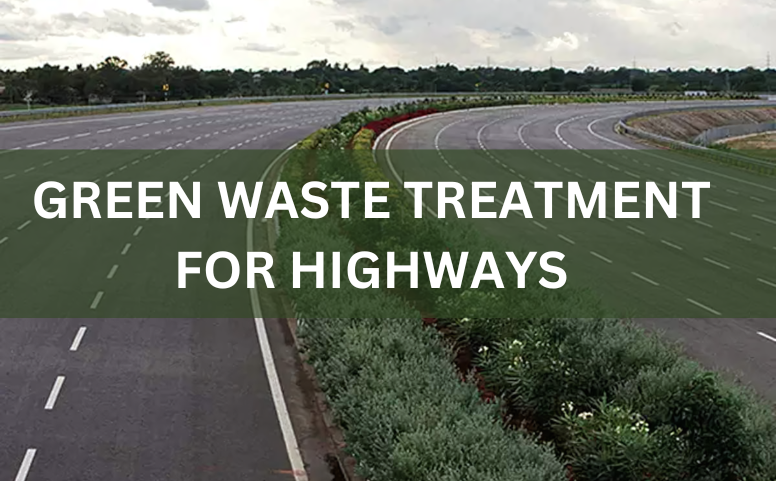
Green waste Composting For Highways

GREEN WASTE COMPOSTING AT HIGHWAYS

Welcome to our blog dedicated to the transformative journey of green waste treatment for highways! As our world continues to grapple with the pressing challenges of environmental conservation and sustainability, innovative solutions are essential. Highways, vital arteries of our transportation network, generate a significant amount of green waste—grass clippings, tree trimmings, and organic debris—that often goes unnoticed yet holds immense potential for positive environmental impact.

In this space, we will explore how the effective management and treatment of highway green waste can contribute to a healthier planet. From reducing landfill burden to generating renewable energy and enriching soils, the benefits are vast and varied. 

A significant challenge faced by most highways is the treatment of green waste generated along their routes. Allocating a designated area for this purpose is impractical due to the need for supervision, manpower, safety measures, and a dedicated person to oversee the entire process. Consequently, many opt for less sustainable methods, such as burning the waste or using pit hole systems for composting.

Sustainable highway waste management and road maintenance

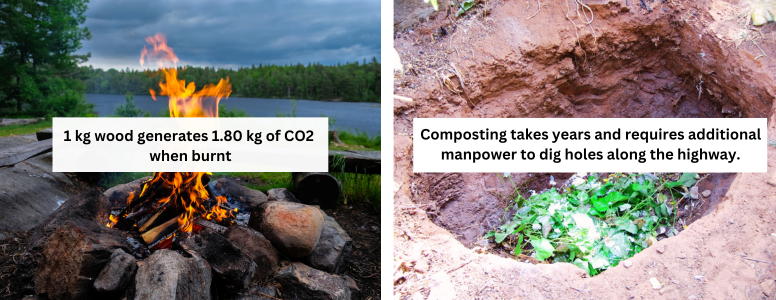
When burned, wood generate more CO2 emissions per unit of energy generated than fossil fuels. 1 kg wood generates 1.80 kg of CO2 when burnt. This leads to GHG emissions which will impact the environment.

On the other hand pit system composting of green waste also has its challenges like,

  • It necessitates additional manpower for excavating pits along highways.
  • Decomposition is a prolonged process, extending over several years.
  • The resulting compost mixes in the soil over time and cannot be harvested.

What is the green waste composting solution available for highway?


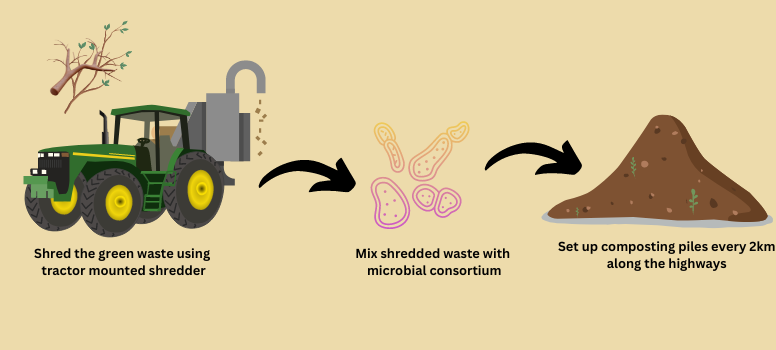
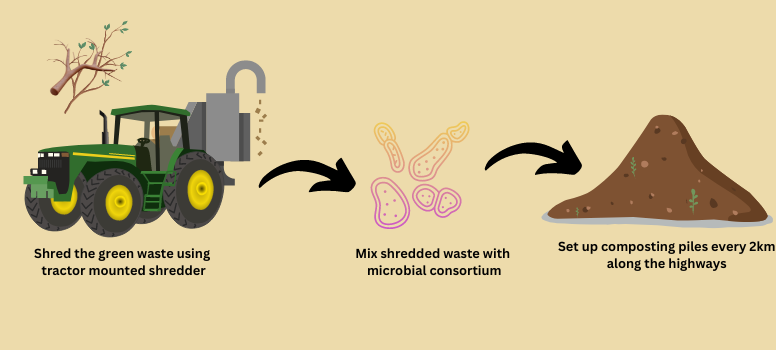
The optimal solution for treating green waste along highways is to create composting heaps of shredded green waste. By mixing this waste with a microbial consortium and covering the heaps with shading nets to prevent debris from blowing onto the roads during windy conditions, we can effectively manage the waste. These composting piles can be established every 2 kilometers along the highways. Utilizing existing manpower, the harvested compost can then be used to green the highway median plants, promoting a sustainable and eco-friendly approach to highway maintenance.

How does green waste treatment at highway reduce water consumption over time?


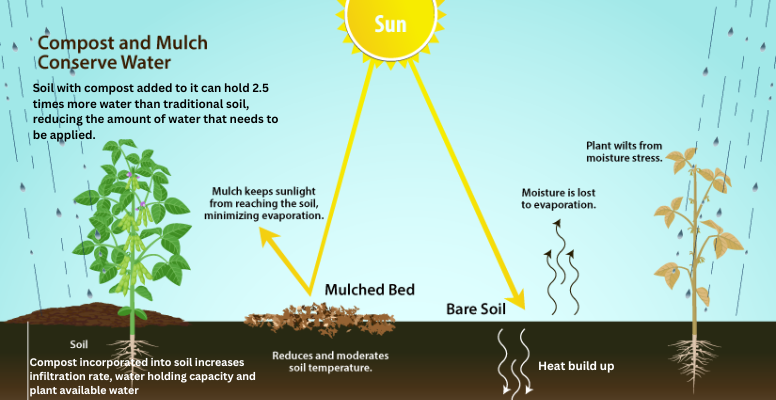
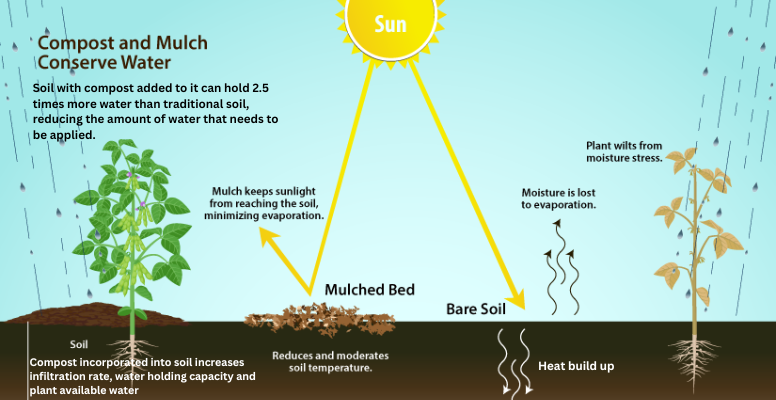
Applying compost to the soil will gradually reduce the amount of water needed for plants. Soil with compost added to it can hold 2.5 times more water than traditional soil, reducing the amount of water that needs to be applied. Compost offers the following benefits.

  • Soil Regeneration
  • Retains Moisture in the Soil
  • Three times higher NPK ratio and slow release of nutrients to plants
  • Useful to convert soil nutrients in water soluble form

Highway composting: Enhancing water efficiency


Green waste composting for airports

Green waste treatment for aitports

Airports strive to create a warm and inviting atmosphere by incorporating nature into their spaces, resembling a forest-like environment that enhances the travel experience. Travellers often feel inspired to capture the vibrant green surroundings, adding to their overall enjoyment.

However, have you ever considered the substantial amount of green waste generated in this process? Some airports produce up to 10 tonnes of green waste daily, posing a significant challenge in managing and treating such large quantities of organic waste safely.

Typically, this green waste includes leaf trimmings, dried leaves, twigs, branches, and logs. The primary challenge lies in effectively managing and treating such substantial volumes of landscape waste, as landfill disposal can be environmentally hazardous. During hot weather conditions, there is a risk of wood catching fire, which can be highly dangerous.

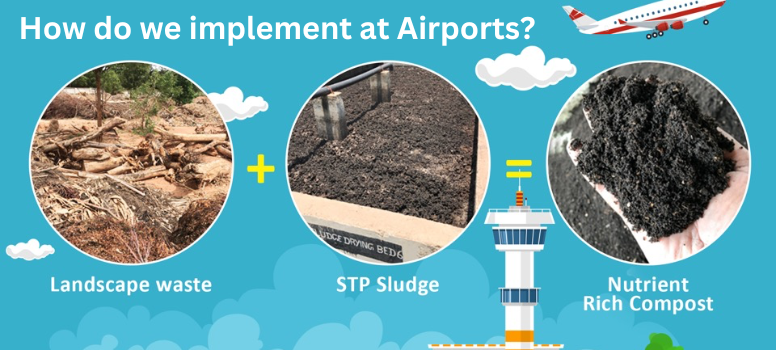
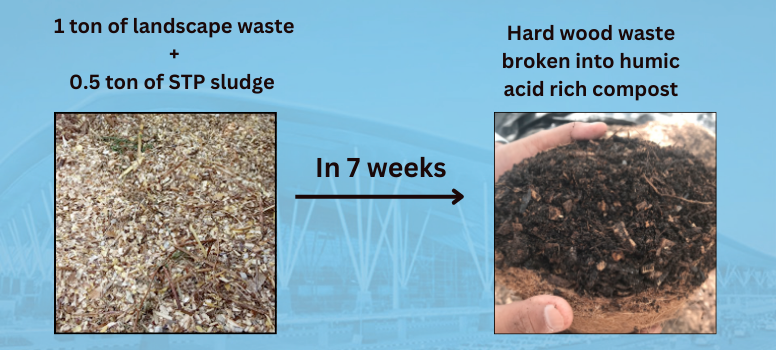
At Orbin™, drawing from years of experience in composting, we have developed a straightforward and effective solution for treating any amount of green waste and transforming it into nutrient-rich compost. Through trials conducted at an international airport, we have successfully composted green waste alongside STP sludge, demonstrating our innovative approach to sustainable waste management.

How to implement green waste composting for all airports?


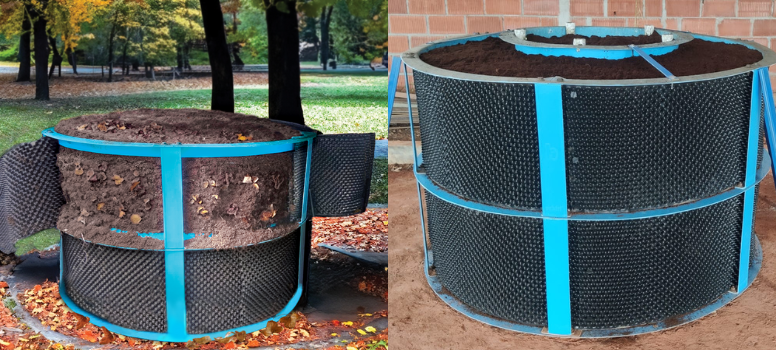
Green waste treatment at airports involves mixing shredded landscape waste with STP sludge and a microbial consortium. The shredded landscape waste is Carbon rich and STP sludge is nitrogen rich. With the microbial consortium added it maintains the right C:N ratio, increases beneficial microbes and accelerates the decomposition process. This mixture will be placed in Orbin SILO composting containers located in the designated area for green waste management. These containers provide 360-degree aeration, including force aeration and leachate control, ensuring an odour-free, fly-free, and rodent-proof composting process.

The entire setup will operate in a controlled environment with continuous aeration facilitated by biofloc blowers. This ensures optimal conditions for composting throughout the process. Additionally, the flexibility of the products and equipment offered by Orbin™ allows for the entire setup to be relocated to a new location if needed, demonstrating adaptability and efficiency in waste management solutions.The units will be covered with rainproof shelters to prevent attracting birds, thereby enhancing airport safety measures. The resulting compost can then be used to nurture airport plants, promoting a lush green environment without the need to purchase compost externally.

Green waste composting solution for airport in less space

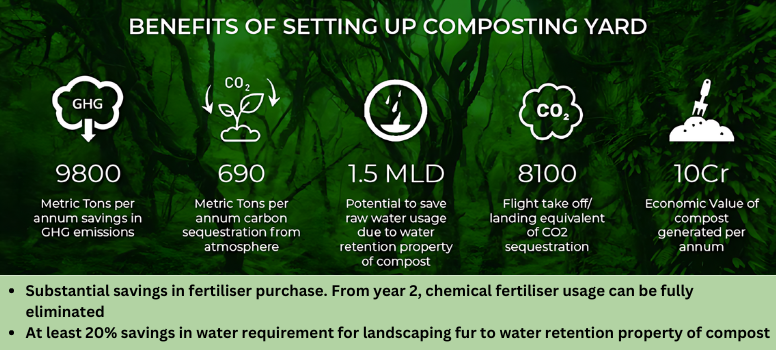
The advantages of composting green waste at the source, based on the treatment of 5 tons per day, include significant reductions in GHG emissions, water usage, enhanced carbon sequestration, and the economic value of the compost generated. Here’s a summary of these benefits:

  1. Reduction in GHG Emissions: Composting green waste at the source minimizes greenhouse gas emissions that would otherwise result from landfilling organic materials.
  2. Water Usage Savings: The nutrient-rich compost produced helps retain soil moisture, reducing the need for frequent watering.
  3. Carbon Sequestration: The composting process enhances the soil’s ability to sequester carbon, contributing to climate change mitigation.
  4. Economic Value: The resulting compost is a valuable product that can be used to enrich soils, reducing the need for chemical fertilisers and lowering overall landscaping costs.

GHG savings through green waste composting at airports

Results of Green waste composting pilot conducted in an international airport

How can we compost green waste at airport

Our product, Orbin Silo, is designed to be highly scalable, allowing it to accommodate different quantities of green waste generated. Unlike conventional composting methods that often require extensive space and infrastructure, Orbin Silo is compact and efficient, making it ideal for various settings, including airports and highways for green waste treatment.

Key Features of Orbin Silo:


  1. Scalability:
    • Whether you’re dealing with a small amount of green waste or several tons per day, Orbin Silo can be scaled up or down to meet your specific needs. This flexibility ensures that our solution can grow with your waste management requirements.
  2. Space Efficiency:
    • Orbin Silo occupies significantly less space compared to traditional composting methods. This makes it suitable for urban environments and areas where space is at a premium.
  3. Simplicity:
    • The composting process with Orbin Silo is straightforward and user-friendly. Our system is designed for ease of use, requiring minimal training and maintenance. Simply load the green waste, and the system takes care of the rest, producing high-quality compost efficiently.
  4. Environmental Benefits:
    • By composting green waste on-site, Orbin Silo helps reduce greenhouse gas emissions associated with transporting and landfilling organic waste. The resulting compost enhances soil health and reduces the need for chemical fertilizers, contributing to sustainable waste management practices.
  5. Economic Value:
    • The high-quality compost produced by Orbin Silo can be used to enrich soil in landscaping, agriculture, and gardening, providing economic value and reducing the costs associated with waste disposal and soil amendment.

Product for composting of green waste at airport

Get in Touch

To learn more about how Orbin Silo can revolutionize your green waste management, contact us today. Our team is ready to provide detailed information and assist you in implementing a sustainable and efficient composting solution.

Debunking Myths about On-Site Organic Waste Converters

Debunking


OWCs offer promising solutions for managing organic waste directly at the source, but there are several misconceptions surrounding their effectiveness and practicality. In this blog post, we’ll debunk common myths about OWCs and provide factual information to help you better understand their benefits.

OWCs are Expensive to Install and Maintain

One common myth about OWCs is that they are expensive to install and maintain. However, there are various types of OWCs available, including cost-effective options suitable for different budgets. In fact, investing in an OWC can lead to long-term savings by reducing waste disposal fees and even generating revenue from selling compost produced by the system. Our superior design easy composting Orbin Eco-OWC offers a cost-effective product and solution for waste treatment. The annual maintenance cost is also minimal, making it a financially sound investment for organizations of all sizes. Orbin Eco-OWC operates without electricity and high temperatures, making it a more sustainable and cost-effective solution for organic waste management

OWCs Produce Foul Odours

Through our expertise, we’ve observed that many OWCs may produce foul odors due to various factors, such as an imbalance in the carbon and nitrogen ratio, inadequate aeration conditions, exposure of waste to high temperatures, and more. Over time, we have accumulated invaluable knowledge and expertise through extensive research and hands-on experience and providing the necessary requirements for odorless composting processes. This experience has allowed us to develop our Orbin Eco-OWC, ensuring a pleasant and guaranteed odour-free composting experience for users and surrounding areas.

OWCs Are Complex and Require Specialized Training

Our Orbin Eco-OWC can be managed by any existing worker onsite. Composting with our system is as straightforward as mixing the waste with the absorbent media and adding it to the OWC. That’s it! After just 30 days, high-quality compost will be ready to be harvested. This simplicity makes the Orbin Eco-OWC accessible to all, eliminating the need for extensive training and specialized skills.

OWCs Are Inefficient and Do Not Produce Quality Compost

The Orbin Eco-OWC harnesses microbial actions in an aerobic composting process without the need for electricity, shredding, or high temperatures. Our system utilizes the Orbin composting enzyme premix, which not only acts as an absorbent, maintaining the necessary carbon ratio and moisture levels but also facilitates controlled aerobic composting. The result? High-quality compost that has undergone rigorous lab testing to ensure its quality and effectiveness. With the Orbin Eco-OWC, inefficiency is a myth of the past.

OWCs Are Only Suitable for Large-Scale Operations

Some believe that OWCs are only practical for large-scale operations and are not suitable for smaller settings. However, Orbin Eco-OWC has been successfully implemented in various environments, including households, businesses, and communities of all sizes. The scalability allows it to be customized to meet the needs of different users, debunking this myth.

If you’re interested in learning more about Orbin Eco-OWC and how they can benefit your organization or community, contact us today! Our team is here to provide additional information and assistance to help you explore the possibilities for your waste management needs. Let’s work together to make a positive impact on the environment with On-Site Organic Waste Converters!

OWC For Apartment OWC For kitchen waste easy compsoting

Compost vs Vermicompost – Advantages of Composting

Vermicompost Resized


Compost is typically made from organic materials like Kitchen waste, yard waste and plant matter that decomposes over time to create nutrient-rich soil amendment. Microbes are responsible for composting.

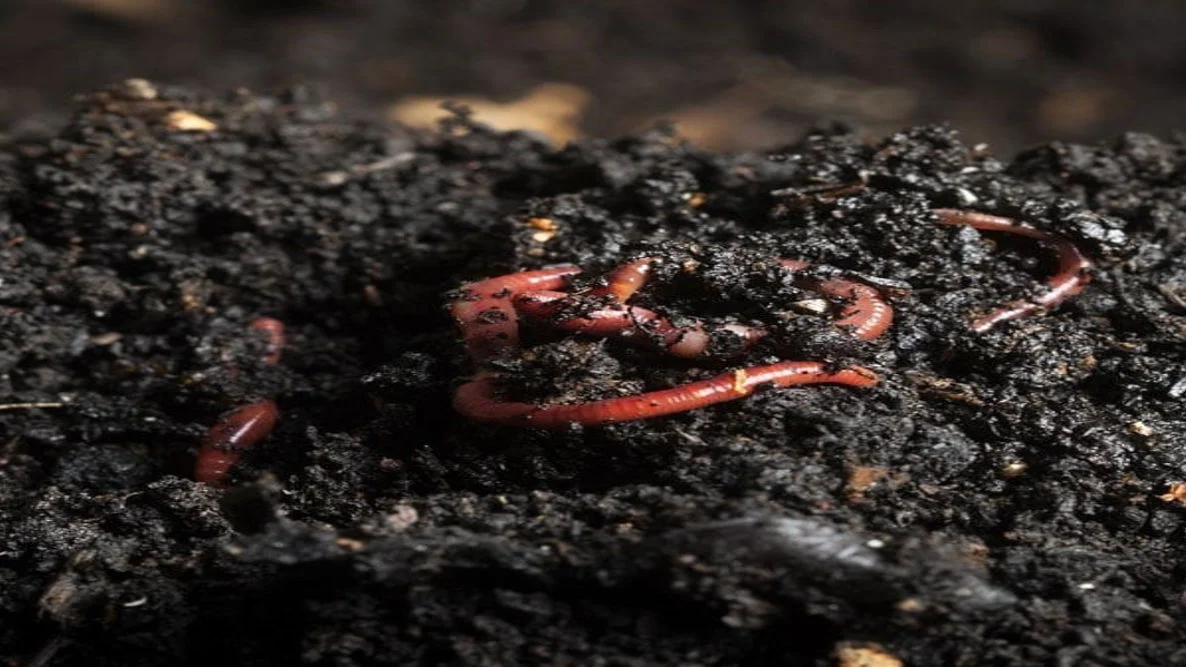
Vermicompost on the other hand is made specially with the help of worms that break down organic matter into nutrient-rich fertilizer through their digestion process. Earthworms are utilized to speed up the decomposition process.

Let us understand the advantages of Composting over Vermicompost.

  • Higher NPK ratio: Compost has higher NPK ratio than Vermicompost which will help slow release of nutrients to plants.
  • Less Moisture content: In Compost the moisture content will be around 30 to 40% where as in Vermicompost it will be 70 to 80%. In traditional composting, moisture levels are managed to optimize the decomposition process, ensuring that organic materials break down efficiently without becoming overly saturated. The lower moisture content helps maintain aerobic conditions, allowing beneficial microorganisms to thrive and decompose the organic matter. In vermicomposting, moisture management is also critical, but the process often results in a more consistently moist environment due to the presence of worms. The worms require moisture to survive and move through the organic material, and their activities contribute to the overall moisture content of the vermicompost.
  • Temperature control: In vermicomposting, earthworms require an ideal temperature range of 18 to 25 degrees Celsius to survive, and they cannot tolerate temperatures higher than this. Composting, however, does not necessitate such controlled temperature conditions.
  • Cow dung ingestion: Composting typically requires carbon rich material since the organic waste is nitrogen rich for the decomposition process whereas the Vermicomposting uses cow dung for the earth worms to grow, However, the use of cow dung as a substrate for earthworms is a traditional method that may not be suitable or practical for urban environments due to space constraints, odour concerns, and sourcing difficulties.
  • Versatility: Compost can be made from a wide range of organic materials, including yard waste, kitchen scraps, and agricultural residues. This versatility allows for the recycling of a broader range of materials compared to vermicompost, which primarily relies on organic matter suitable for worms. Foods such as citrus fruits, onions, garlic, spicy foods, dairy products, meat, fish, and oily or greasy foods may contain substances that can harm worms. These foods can create acidic or toxic conditions in the worm bin, attract pests, produce foul odors, or interfere with the worms’ ability to breathe. 
  • Scalability: Composting can be done on a larger scale more easily than vermicomposting, making it suitable for larger operations such as commercial composting facilities or municipal composting programs.
  • Faster Process: Composting typically occurs at a faster rate than vermicomposting, especially when using methods such as aerobic composting, which accelerates the decomposition process through microbial activity. This faster turnaround time can be advantageous for those needing compost more quickly.
  • Weed Seed and Pathogen Reduction: Composting can effectively neutralize weed seeds and harmful pathogens present in the organic materials, reducing the risk of weed growth and disease transmission in the resulting compost. Vermicomposting systems may attract pests such as fruit flies, mites, or rodents, particularly if the composting environment is not properly managed or if inappropriate food waste is added. Also red ants will be attracted towards the compost pile if earth worms die during the process of harvesting the compost.
  • Improved Soil Structure: Compost can help improve soil structure by adding organic matter and enhancing soil moisture retention, aeration, and drainage. While vermicompost also improves soil structure, compost may have a broader range of particle sizes, contributing to better soil texture.
  • Lower Maintenance: Composting typically requires less maintenance and monitoring compared to vermicomposting. Once the compost pile is established and properly managed, it can largely decompose on its own.

Compost vs Biogas: Advantages of Compost

Composting Vs Biogas


Indian villages typically have considerable amount of biomass in the form of Cow dung, Sheep/Goat dung, Crop Residues, Leaves & Twigs of trees, Dry grass etc.

Current practice of putting all the animal dung and residues to a pit and let it decompose to Farm Yard Manure (FYM) is time-consuming and labor intensive

Farm Yard Manure (FYM) most often does not provide all required nutrients for the plants to grow

For heterogenous waste like canteen waste, bio-gas generation is not the optimal solution. Lets understand the reasons,

  • This is because bio-gas works best when the waste is calorie rich and is of one type Ex. Potato peels, Starch from rice, Baking waste involving flour, fat & sugar.
  • Since canteen waste has fruit & vegetable peels, egg shells, bones etc. the waste in general is not calorie rich.
  • Such kind of waste when treated in bio-gas plant builds up scales in the bio-gas chamber and has to be frequently cleaned. The cost of maintenance is extremely high.
  • Scale of treatment should be more than 20 tons per day using sophisticated bio-gas setup which requires constant monitoring of various bio-chemical parameters and corrections to input materials based upon the reactions in the digester.
  • For every 1 ton of food waste, over 3 tons of nitrogen rich sludge is formed. There should be a process to treat this sludge and convert into non-toxic soil friendly format (i.e. composting of the sludge needs to be done)
  • For 1 ton of food waste treated through anaerobic digestion, approx. 200 cubic feet of biogas is produced. Out of this, 50% is methane and rest is CO2. However the utilisation of methane has to happen at source itself.
  • Botting of bio-gas under high pressure into cylinders consumes almost 70% of the energy equivalent that is put into a cylinder. So transporting bio-gas is not a sustainable option.
  • Since 3 tons of semi-liquid sludge is formed for every 1 ton of food waste, the cost of composting is 3 times higher as the absorbent (carbon rich material) required will be more to absorb the moisture.

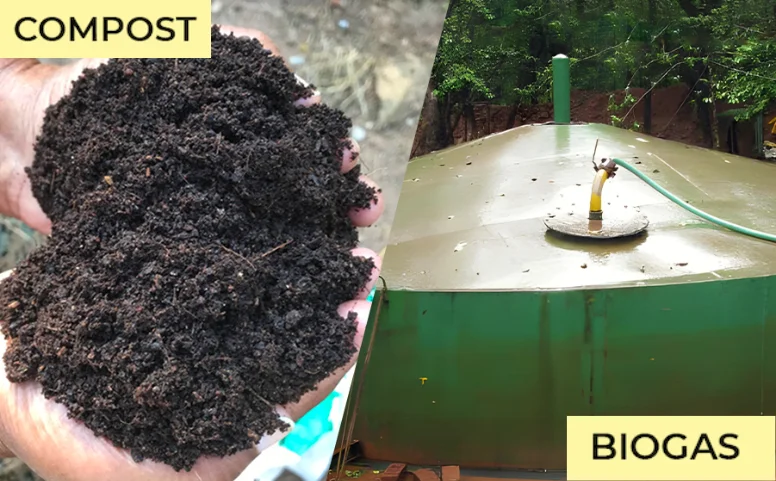
Composting on the other hand deals with all kinds of organic waste and there is only one resultant output – compost. This can be used for agricultural purposes and there is always demand for it. The benefits of the composting project can be summarized as “tangible” and “in-tangible”

TANGIBLE BENEFITS:

  • Considering 1 tons of canteen waste treatment per day and using 0.5 tons of landscape waste to treat the same, we can expect an output of 0.5 tons of compost per day after 30 days. This translates into 15 tons of compost per month or 180 tons per annum
  • 180 tons of compost can approximately be used to grow crops in 90-100 acres of land. Typically the basal application of compost is 2 tons per acre of farm land.
  • Alternatively, the compost can be used to green the road side plants & trees and create an urban forest of over 18000 trees per annum (Dosage 10kg / plant).
  • Currently there is costs associated to dispose off the landscape waste and canteen waste. This will be saved as the waste is treated within the premises.

INTANGIBLE BENEFITS:

  • Savings in Green House Gases (GHG) due to daily transportation of waste outside the campus
  • Over 180 metric tons of carbon per annum will be given back to the soil which helps in further carbon  sequestration by the soil.
  • As per scientific data available, every hectare of land treated with compost sequesters 2.5 metric tons of carbon-di-oxide from the atmosphere per annum. As and when farmers use the compost in their lands to grow food crops, the CO2 absorption by the soil is enabled
  • Goodwill generated by providing compost to farmers / local communities will be significant.


Benefits of using Orbin Eco-OWC over Mechanical OWC

Echo owc 901

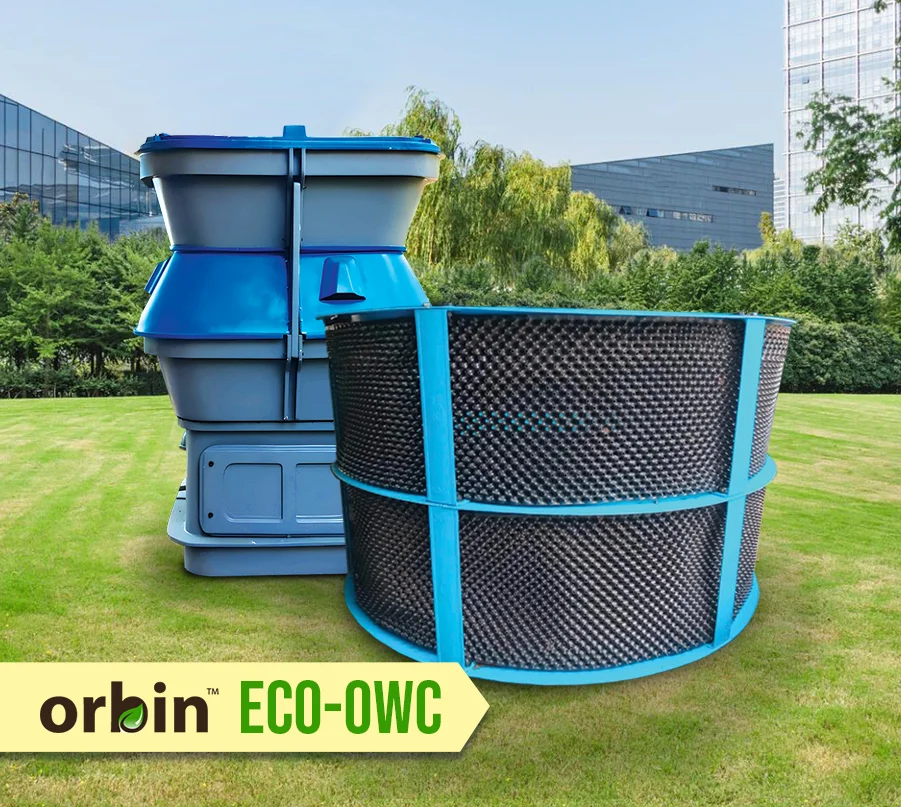
Orbin ECO-OWC offers cost effective, smell free, no power , labour friendly and nutrient rich compost

A Comparison of Orbin™ ECO-OWC and Mechanical OWC is as follows,

  • Functionality:
    • Orbin ECO-OWC: Composting using microbial action. Organic waste convertor without electricity required.
    • Mechanical OWC: Relies on automated systems – requires electricity.
  • Capacity:
    • Orbin ECO-OWC: Solutions available to treat as little as 2kg per day to 20 tons per day of waste.
    • Mechanical OWC: Capacity ranges from 400 to 800 kg per day.
  • Fabricated or Manufactured:
    • Orbin ECO-OWC: Manufactured product using FRP and polyethylene parts. Long life assured. Corrosion proof and rodent proof. Does not require maintenance and no down time because it uses natures principle of decomposition.
    • Mechanical OWC: Manufactured product utilising motors and blades for waste processing. Requires regular maintenance.
  • Odour:
    • Orbin ECO-OWC: Guaranteed no odour due to the Carbon and Nitrogen balance provided by the Orbin composting enzyme due to which no flies are attracted towards the OWC unit.
    • Mechanical OWC: Emits bad odour due to the imbalance in carbon and nitrogen ratio and flies hovering around the OWC unit.
  • Liquid/Leachate tray:
    • Orbin ECO-OWC: Inbuilt and concealed liquid/leachate tray prevents odour. Features a pipe for leachate removal that will be connected to STP. 
    • Mechanical OWC: Not applicable, uses electricity to dry out leachate.
  • Labor requirement:
    • Orbin ECO-OWC: Maximum time required is 30 minutes for 1 labor, involving mixing waste with enzymes and dumping the mix into Orbin Stax. Designed for simplicity, requiring minimal skill; can be operated by any individual.
    • Mechanical OWC: Time required is 4-6 hours for 1 skilled labor, involving various activities like inspecting waste for metal parts, adding waste in batches, adding enzymes, and transferring cured waste to storage. Skilled labor needed due to the complexity of tasks involved, making it less accessible for untrained individuals.


Select Benefits of Composting-7 reasons why it is important

Over the last couple of years so much has been heard about composting and people surely have a lot to say. While there has been a general improvement in the awareness, teaching and encouragement of sustainable practices around our daily behavior there are also a fair share of misconceptions in the same regard.

A popular misconception I have come to find is that biodegradable and compostable mean the same thing. This is incorrect! Biodegradable means that a product will break down naturally over any period of time. So, what is composting? As per the office of campus sustainability, university of Michigan, composting is a natural process by which any organic material, such as food waste or lawn trimmings, is broken down by naturally occurring bacteria and fungus in the soil to form compost. The resulting materials—compost—is a nutrient-rich soil amendment that looks a lot like soil itself. A certified compostable product will contain the required amount of material that breaks down within 180 days into pieces of 2mm (or less). This process of breaking down cannot release any harmful substances into the soil such as heavy metal.

While even a layman may understand the numerous benefits of such a process, I want to put across exactly why we should take and contribute to this process seriously. Let’s look at 7 reasons why we should be turning ‘trash to treasure’!

1. It is SO easy!

Composting is so easy, it can in almost any setting be successful. From bins indoor in an apartment to outdoors in backyards to spaces in offices where material that is compostable is collected and then moved to an external composting facility. Just enabling this 385-million-year-old natural cycle is so empowering!

2. You are making waste useful.

The primary purpose of composting is to make waste or something that is of no use to us useful; and how great is that! So, you are not just making waste useful but, in the process, also reducing waste. Organic waste makes up 25-50% of the garbage that is thrown away. While putting all organic waste under this process is difficult, it must be the goal as composting can significantly reduce overall trash.

3. Improves plant productivity

The process of composting improves plant productivity in terms of higher carbon dioxide absorption and better root growth. The increased microbial activity by means of the compost process while increasing carbon storage in soil provides an environment for growing ‘Mycorrhizal Fungi’ which absorbs carbon dioxide holding back carbon in soil. This system is designed to build and improve soil health. Applying this compost to soil makes for happy plants and better time tending your garden!

4. You are conserving resources!

With the current changes in global climate and its adverse effects it becomes extremely important to make the small lifestyle changes. These eventually have great impact. Composting is definitely a good place to start. Speaking of conserving resources, composting helps save water by soaking it up and releasing it to plants. This means that when there is adequate compost, it isn’t necessary to water the plants as much. When compost is thickly placed as an upper layer it also prevents water from evaporating. With the benefits of the compost created, we also avoid the use of a lot of external resources. Hence, we save on fuel and energy along with such transportation costs. This is such a win-win in so many ways!

5. Enabling a Circular Economy

A circular economy is nothing but a model of production and consumption which comprises of sharing, reusing, repairing, refurbishing and recycling existing material and products for as long as possible. This simply extends to the life cycle of products. Further value is created because a product that is almost exhausted is used productively again and again. This implies reducing waste to a minimum as when a product reaches the end of its life, its materials are kept within the economy whenever possible. Carbon belongs to the soil. Composting of organic waste ensures carbon is given back to the soil. Composting is the closest and most basic example of a circular economy.

6. It is more cost effective!

Composting is extremely inexpensive, especially considering the benefit that it reaps. The use of existing internal resources is way more advantageous to plant growth than the use and purchase of external resources. Composting enriches the soil with nutrients and in turn eliminates the need for such pesticides or fertilizers that require fossil fuels for production and can cause harm to health. There is also an improvement in the soil’s capability to retain moisture thereby reducing erosion. Plant diseases and pests drop by a significant number and it additionally aids in removing carbon from the atmosphere.

7. Composting is fun!

This entire process to put it very simply is actually really fun! Well, maybe ‘satisfying’ and ‘empowering’ is a better way to put it. When you carry out this process of composting you are definitely more aware of waste in general and are completing the recycling loop in its true sense.

Do you really need more reasons to start composting? Or if not start, at least support and enable this process of converting trash to treasure? I guess not. Happy Composting, folks! Explore our products – https://orbin.in/products/

Reasons for Composting, Advantages of Composting Benefits of composting Composting Solution for Climate change

Kitchen waste composting for Apartments and Gated communities

Kitechen waste composting

Composting Made Easy with Orbin STAX and Orbin SILO

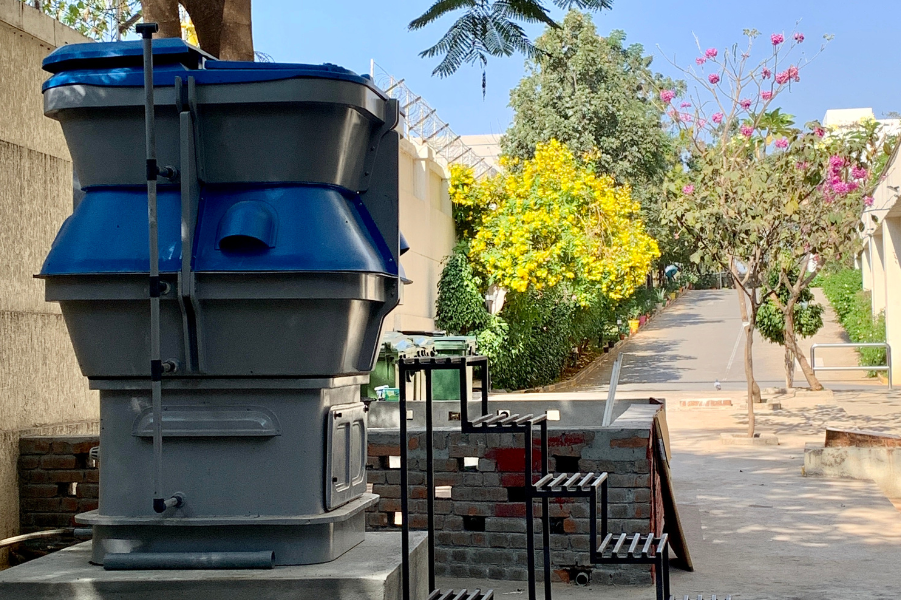
At OWC, we provide two innovative composting solutions to efficiently process kitchen waste: Orbin STAX and Orbin SILO. Both systems are designed for simplicity and sustainability, yet they differ in usage and application.

Orbin STAX: Effortless Composting Solution

If you’re looking for a simple and low-maintenance method to compost kitchen waste, Orbin STAX is the ideal choice. Here’s how it works:

  1. Mix: Combine kitchen waste with enzymes.
  2. Compost: Add the mixture to the Orbin STAX unit.
  3. Harvest: In just 25–30 days, collect nutrient-rich compost perfect for greening your apartment community.

For finer compost particles, a curing process is recommended:

  • Transfer the compost to Orbin SILO for an additional 20 days of curing.
  • The result is a rich, black-colored compost packed with nutrients for healthy plant growth.

This entire process is electricity-free, relying on the natural activity of aerobic bacteria.

Orbin SILO: All-in-One Composting and Curing

For those seeking an all-in-one solution, Orbin SILO is a versatile system where composting and curing occur within the same unit. Here’s how to use it:

  1. Shred: Process the kitchen waste for better decomposition.
  2. Mix: Add enzymes to the shredded waste.
  3. Compost and Cure: Transfer the mixture into Orbin SILO.

In just 30 days, you’ll have compost ready for landscaping and gardening.

  • Each Orbin SILO unit produces approximately 1 ton of compost per cycle.
  • The system is scalable to fit your available space and the volume of kitchen waste, making it an excellent choice for larger communities.

Why Choose Orbin Composting Solutions?

Both Orbin STAX and Orbin SILO offer:

  • Efficient Composting: Fast and odor-free processes tailored for apartment and villa communities.
  • Sustainable Design: No electricity required, powered by natural aerobic bacteria.
  • Nutrient-Rich Output: High-quality compost to enrich soil and promote healthy plant growth.

Discover More

Curious about how these solutions work in real-life settings? Visit our Consultancy page to view images of installations in apartment and villa communities.

Take the First Step Towards Sustainability

Whether you prefer the user-friendly Orbin STAX or the scalable Orbin SILO, both solutions make composting kitchen waste easy and eco-friendly. With minimal effort, you can transform waste into valuable compost, enhance your surroundings, and embrace sustainable living.

For more details or to get started, contact us today. Let’s work together to create greener, cleaner communities!

How does green waste treatment at highway reduce water consumption over time?

GREEN WASTE COMPOSTING AT HIGHWAYS

As the world faces urgent challenges in environmental conservation and sustainability, innovative approaches are more crucial than ever. Highways, the lifelines of our transportation systems, produce substantial amounts of green waste—grass clippings, tree trimmings, and organic debris. Often overlooked, this waste holds immense promise for environmental benefits.

In this blog, we’ll explore how effective management and treatment of highway green waste can significantly contribute to a healthier planet. From reducing landfill usage to creating renewable energy and enhancing soil quality, the possibilities are both diverse and impactful.

One of the major hurdles in this process is the practical treatment of green waste generated along highway routes. Setting up designated areas for waste management often proves unfeasible due to challenges like supervision, labor requirements, safety protocols, and the need for dedicated personnel. As a result, less sustainable methods—such as burning or using pit composting systems—are frequently adopted, despite their environmental drawbacks.

Let’s reimagine these challenges as opportunities for innovation and sustainable change!


When burned, wood produces more CO2 emissions per unit of energy than fossil fuels. For example, burning 1 kg of wood releases approximately 1.80 kg of CO2, contributing to greenhouse gas (GHG) emissions that significantly impact the environment.

Alternatively, pit composting of green waste presents its own set of challenges:

  • It requires additional labor for excavating pits along highways.
  • The decomposition process is slow, often taking several years to complete.
  • The compost eventually blends with the surrounding soil, making it difficult to harvest or utilize effectively.

What is the green waste composting solution available for highway?

An effective solution for managing green waste along highways is to establish composting heaps made from shredded green waste. By integrating a microbial consortium into the waste and covering the heaps with shading nets, we can prevent debris from blowing onto roads during windy conditions and ensure efficient decomposition. These composting heaps can be set up at 2-kilometer intervals along the highways. Using the existing workforce, the harvested compost can be applied to nourish the plants in highway medians, fostering a sustainable and environmentally friendly approach to highway maintenance.

How Does Green Waste Treatment Along Highways Reduce Water Consumption Over Time?

Incorporating compost into the soil significantly reduces the water required for plant maintenance. Compost-enriched soil can retain up to 2.5 times more water than traditional soil, decreasing the frequency and quantity of watering needed. This process not only conserves water but also improves soil health and plant growth.

Key Benefits of Compost in Soil:

  • Soil Regeneration: Restores soil structure and fertility.
  • Enhanced Moisture Retention: Helps soil hold more water, reducing evaporation and runoff.
  • Improved Nutrient Supply: Provides a threefold higher NPK ratio with a slow release of nutrients to plants.
  • Nutrient Solubility: Converts soil nutrients into a water-soluble form, making them more accessible to plants.

By treating green waste effectively, highways can adopt a sustainable approach that benefits both the environment and water resources.