What are the causes of Odour and Flies Issues in Mechanical OWC Systems

Mechanical OWC


To comprehend why odour and maggot issues arise in mechanical OWC systems, it’s necessary to understand how these systems operate.

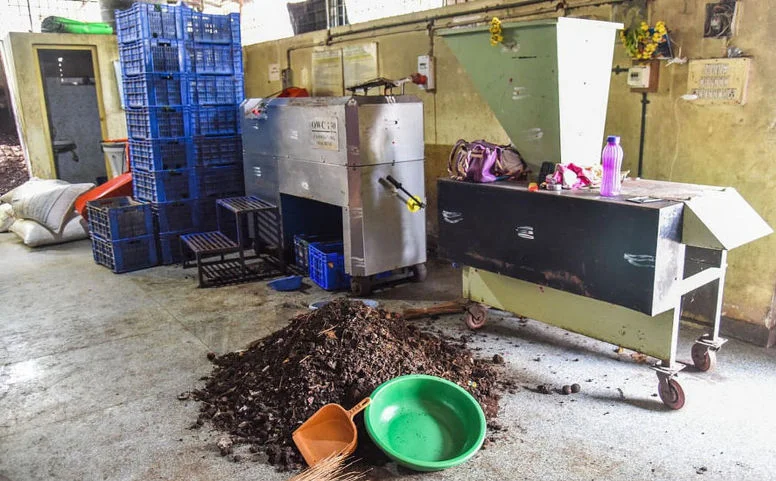
With one laborer overseeing waste treatment daily, the process involves several manual tasks such as segregation of waste, a crucial step aimed at inspecting for any non-organic materials such as metals, plastic, or threads. Following this, the waste is added into the mechanical OWC. Subsequently, waste is initially shredded, mixed, and subjected to high temperatures, essentially undergoing a cooking consuming electricity during the entire process of waste treatment. However, despite expectations for the output to be semi-decomposed compost, it often results in undigested and dehydrated waste which emits odour and when this is then transferred for curing to crates tends to attract flies due to its unprocessed nature. 

The reason for the odor in Mechanical OWC is due to imbalance of the C:N ratio before starting with the waste treatment. The process in Mechanical OWC is more of dehydrating and exposing the waste to high temperatures . This is the reason for odour and flies issues

This entire waste treatment process requires up to 8 hours of labor for a single worker per day.

What sets Orbin™ Eco-OWC solutions apart is the unique functionality:

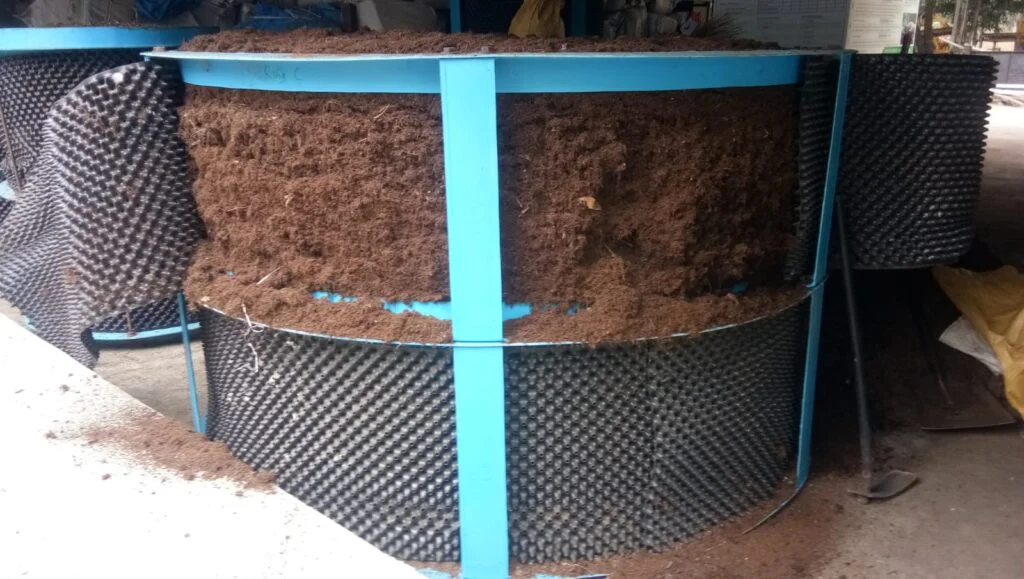
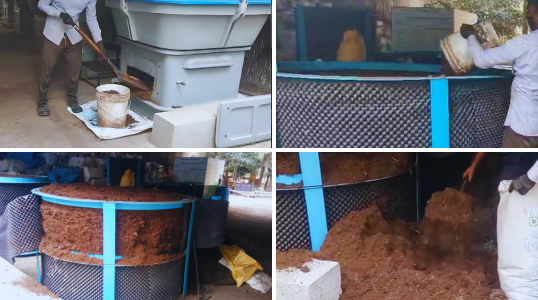
In the case of Orbin™ Eco-OWC, the process is streamlined and user-friendly. Composting using microbial action, no electricity required. With just one laborer managing waste treatment daily, the steps involve waste segregation, shredding (optional), and adding the waste into the Orbin™ Eco-OWC, followed by the use of absorbent material, the Orbin™ Composting enzyme premix. Making composting as easy as 1-2-3.   This cycle is repeated daily, the compost is ready for harvesting by 30 days. The harvested compost can then be loaded into a tractor trailer and transported for use in landscaping purposes.

What makes the entire process of waste management odourless and hassle free is the Orbin™ Composting Accelerator. If Orbin™ Eco-OWC is considered as the hardware, then the enzyme Orbin™ Composting Accelerator is the software. Made up of naturally occurring microbes which have been lab grown and are mixed with cocopeat (by-product of coconut fibre extraction) and other Carbon rich material like herbal extracts residue etc, ensuring the correct balance of Carbon and Nitrogen ratios in waste treatment to maintain an odor-free process.

During the natural decomposition process inside the Orbin ECO-OWC, the temperature rises to around 55 degrees Celsius due to microbial activity. This prevents flies or rodents from being attracted to the unit.

This entire waste treatment process requires up to 1 hour of labor for a single worker per day


SILO 2 1024x579

Unlocking the Secrets of Plant Nutrition: A Guide to Micro and Macro Nutrients

Plant nutrition

Welcome to our comprehensive guide on plant nutrition, where we delve into the fascinating world of micro and macro nutrients. Understanding the role of these essential elements is key to promoting healthy plant growth and maximizing yields in your garden or farm. Let’s explore the fundamentals of plant nutrition and how you can optimize nutrient management for thriving plants.

The Basics of Plant Nutrients

Just as humans intake good and nutritious foods to keep themselves healthy and strong, plants need nutritious foods as well, we call them fertilizers.

As you may know, the soil contains all the nutrients the plants need, and more than that plants are autotrophs, which means they prepare their own food materials through the process called photosynthesis which is needed for their growth and development.

So, do they need extra food?

The answer is yes, they need. Let’s know why in depth.

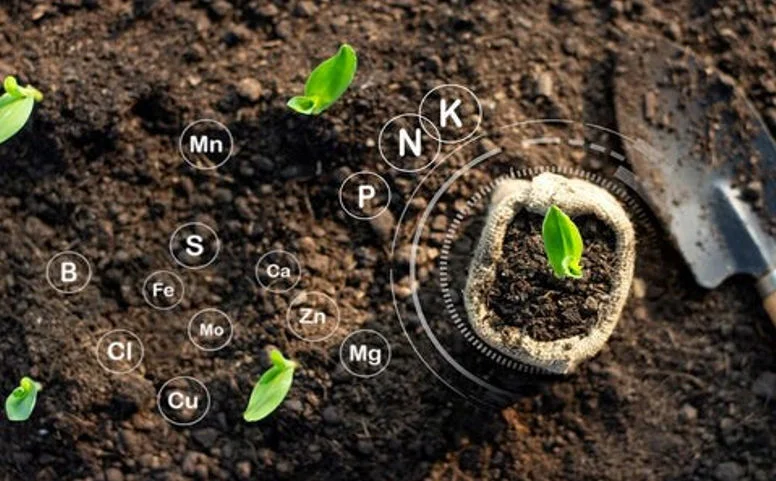
Plants require a diverse array of nutrients to support their growth and development. These nutrients can be broadly categorized into two groups: macro nutrients and micro nutrients.

  1. Macro Nutrients: Required in comparatively larger amounts
    • Nitrogen (N): Essential for vegetative growth, leaf development, and overall plant vigor.
    • Phosphorus (P): Vital for root development, flowering, and fruit set.
    • Potassium (K): Promotes disease resistance, water regulation, and fruit quality.
    • Calcium (Ca): Supports cell wall structure and root development.
    • Magnesium (Mg): A component of chlorophyll essential for photosynthesis.
    • Sulfur (S): Necessary for protein synthesis and enzyme function.
  2. Micro Nutrients: Required in smaller quantity
    • Iron (Fe): Involved in chlorophyll synthesis and enzyme activation.
    • Manganese (Mn): Facilitates photosynthesis and enzyme reactions.
    • Zinc (Zn): Essential for hormone regulation and carbohydrate metabolism.
    • Copper (Cu): Required for enzyme activation and nutrient uptake.
    • Boron (B): Aids in cell division, pollen formation, and fruit development.
    • Molybdenum (Mo): Necessary for nitrogen fixation and enzyme activity.
    • Chlorine (Cl): Plays a role in photosynthesis and osmotic regulation.
    • Nickel (Ni): Required for nitrogen metabolism and enzyme function.

Sourcing Plant Nutrients

  • Soil: The soil serves as the primary reservoir of nutrients for plants, with soil composition influencing nutrient availability and uptake.
  • Organic Matter: While the soil contains nutrients, they may not always be in a water-soluble form accessible to plants. When compost is added to the soil, it begins to breaks down complex organic compounds into simpler forms, releasing nutrients that were previously bound in organic matter into water soluble form which can be absorbed by plants. As microbes multiply and break down organic materials, they gradually release nutrients, making them available for plant uptake over time. This slow-release mechanism ensures a steady supply of nutrients to plants, promoting healthy growth and vitality.
  • Fertilizers: Fertilizers provide supplemental nutrients to replenish soil fertility and support plant growth. By adding fertilizers, gardeners and farmers can ensure that plants receive a balanced diet of essential elements needed for healthy growth, especially during periods of high demand or nutrient deficiencies. The application of fertilizer containing both macro and micro nutrient enables immediate release of nutrients to plants. Fertilizers are mixed with water and sprayed to plants or can also be provided through irrigation.
  • Water: Proper irrigation ensures efficient nutrient uptake by plant roots, transporting essential elements from the soil to the plant.

Detecting Nutrient Deficiencies and Excesses


  • Symptoms of Deficiencies: Yellowing leaves, stunted growth, and poor fruit development are common signs of nutrient deficiencies in plants.
  • Diagnosing Excesses: Nutrient toxicities can manifest as leaf burn, wilting, or abnormal growth patterns, indicating an imbalance in nutrient levels.
  • Soil Testing: Conducting soil tests helps identify nutrient imbalances and guide targeted fertilizer applications to address deficiencies or excesses.

Strategies for Nutrient Management


  • Balanced Fertilization: Select fertilizers or amendments that provide a balanced ratio of macro and micro nutrients to meet plant requirements.
  • Timing of Applications: Apply fertilizers at the appropriate growth stages to support plant needs and minimize nutrient losses through leaching or runoff.
  • Soil Amendments: Incorporate organic compost into soil to improve nutrient retention, enhance soil structure, and promote microbial activity.

In conclusion, understanding the role of micro and macro nutrients is essential for promoting healthy plant growth and maximizing yields in your garden or farm. By optimizing nutrient management practices and addressing nutrient deficiencies or excesses, you can cultivate thriving plants and achieve bountiful harvests. Remember to prioritize soil health, proper fertilization, and regular monitoring to ensure optimal nutrient uptake and plant vitality.

Ready to enhance your plant nutrition knowledge and optimize nutrient management in your garden or farm? Explore our resources on soil health, fertilization techniques, and sustainable gardening practices to unlock the full potential of your plants. Visit our websites – https://www.earthfirstsolutions.in/ and https://arkaspr.com/  Together, let’s cultivate healthy, vibrant gardens and farms fueled by the power of micro and macro nutrients!


PotPlants

The Plant Growth Cycle: Absorbing Inorganic nutrients and converting to Organic compounds

Plant nutrition


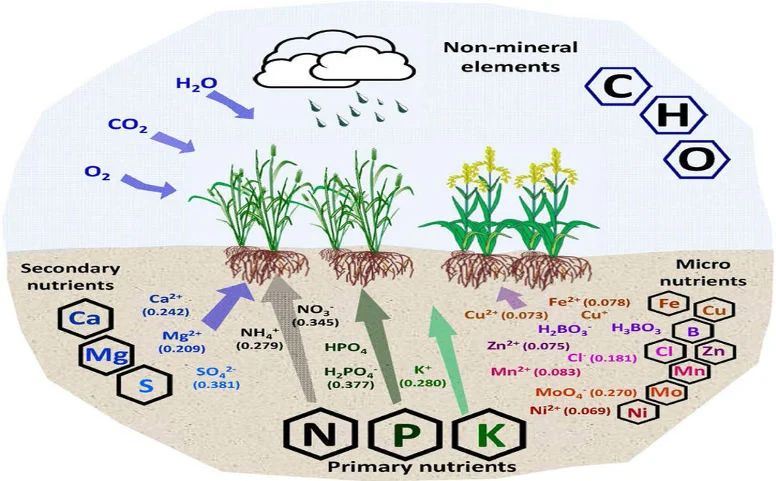
The inorganic to organic cycle of plant growth involves the transformation of inorganic nutrients into organic compounds within plants. This process is essential for the growth, development, and reproduction of plants. The key elements involved in this cycle include carbon, oxygen, hydrogen, nitrogen, phosphorus, sulfur, and various micronutrients.

Here is a simplified overview of the inorganic to organic cycle of plant growth:

  • Absorption of Inorganic Nutrients:
    • Plants absorb water and inorganic nutrients from the soil through their roots. These nutrients include nitrogen (N), phosphorus (P), potassium (K), calcium (Ca), magnesium (Mg), sulfur (S), and various micronutrients (such as iron, manganese, zinc, etc.).
  • Photosynthesis:
    • Plants use sunlight, carbon dioxide (CO2), and water (H2O) to carry out photosynthesis, a process that converts these inorganic substances into organic compounds.
    • Chlorophyll, the green pigment in plant cells, plays a crucial role in capturing light energy and converting it into chemical energy.
    • This energy is used to drive the conversion of inorganic compounds into organic compounds, primarily glucose.
  • Organic Compound Synthesis:
    • Glucose serves as a primary building block for the synthesis of various organic compounds, including carbohydrates, proteins, lipids, and vitamins.
    • These organic compounds are crucial for the growth, development, and overall functioning of the plant.
  • Plant Structure and Storage:
    • The synthesized organic compounds are utilized to build plant structures such as leaves, stems, roots, flowers and fruits.
    • Excess organic compounds are often stored in various plant tissues, serving as reservoirs of energy and nutrients
  • Human Consumption:
    • Humans obtain these organic nutrients indirectly by consuming plant-based foods. Fruits, vegetables, grains, and legumes are rich sources of essential vitamins, minerals, carbohydrates, proteins, and fats.
    • When we consume plant-based foods, our digestive system breaks down these organic compounds into simpler forms, allowing our bodies to absorb and utilize the nutrients.

This cycle continues as plants continuously absorb inorganic nutrients from the soil, converting them into organic compounds through photosynthesis. Humans, in turn, benefit from this organic transformation by consuming plant-based foods and extracting essential nutrients through digestion and absorption, ultimately supporting our health and well-being.

However, the journey of these nutrients doesn’t end here. After being utilized by humans, these organic compounds are broken down into simpler, inorganic forms through metabolic processes and released back into the environment through waste. Eventually, these nutrients return to the soil, where they can once again be absorbed by plants, completing the cycle of nutrient transformation from inorganic to organic and back to inorganic

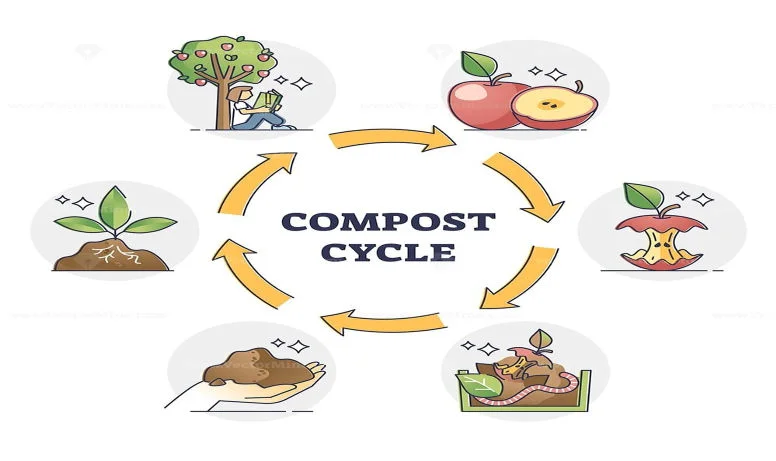
Compost cycle

Kitchen waste composting for Apartment & Gated communities

OWC for apartment communities

In this blog, we’ll explore a straightforward method for composting kitchen waste in apartments. If you’ve struggled with various OWCs (Organic Waste Converters) without success, fear not – we have the solution for you. Drawing from our extensive experience, we’ve addressed common issues found in other market products. Our solution guarantees a 100% success rate, free from concerns such as odour, flies, rodents, and the need for skilled labor.

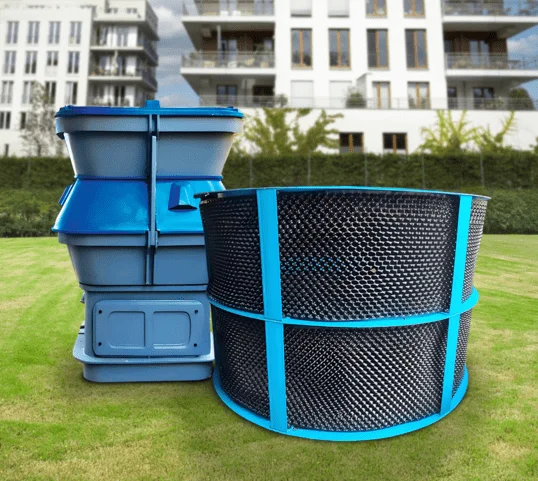
Our OWC provides two composting methods:  Orbin STAX, and Orbin SILO. Both are used for composting kitchen waste, but they differ in how they are used.

If you’re seeking a simple solution where kitchen waste can be easily mixed with enzymes to compost effortlessly with minimal effort from staff, Orbin STAX is the perfect choice. Simply mix the kitchen waste with enzymes, add it to Orbin STAX, and in 25 to 30 days, you can harvest compost suitable for greening your apartment communities. For finer particles, curing with Orbin SILO is recommended. Transfer the compost from Orbin STAX to Orbin SILO for a 20-day curing process. The resulting compost resembles black in colour, rich in essential nutrients for healthier plant growth. This entire composting process operates without electricity, facilitated by beneficial aerobic bacteria.

The alternative method involves using Orbin SILO, where composting and curing occur within the same unit. Here, collected kitchen waste needs to be shredded, mixed with enzymes, and transferred into Orbin SILO. Within 30 days, the compost can be harvested and utilized in landscaping. Each filled Orbin SILO produces approximately 1 ton of compost. Another advantage of Orbin SILO is its scalability, tailored to fit the available space and quantity of kitchen waste.

To view images of our installations in apartment and villa communities, please visit this page – Consultancy

In conclusion, whether you opt for the user-friendly Orbin STAX or the versatile Orbin SILO, our solutions offer efficient and odor-free composting of kitchen waste right within your apartment community. With minimal effort and without the need for electricity, you can produce nutrient-rich compost that enhances your surroundings and promotes sustainable living. Take the first step towards greener practices today with our innovative composting solutions. For more information or to get started contact us directly.


How does composting work?

How does composting works

Composting is a natural process where organic materials, such as food scraps, yard waste, and other biodegradable materials, are broken down by microorganisms into a nutrient-rich soil amendment called compost. This process occurs in a controlled environment, such as a compost bin or pile, where conditions such as temperature, moisture, and aeration are optimised to facilitate decomposition.

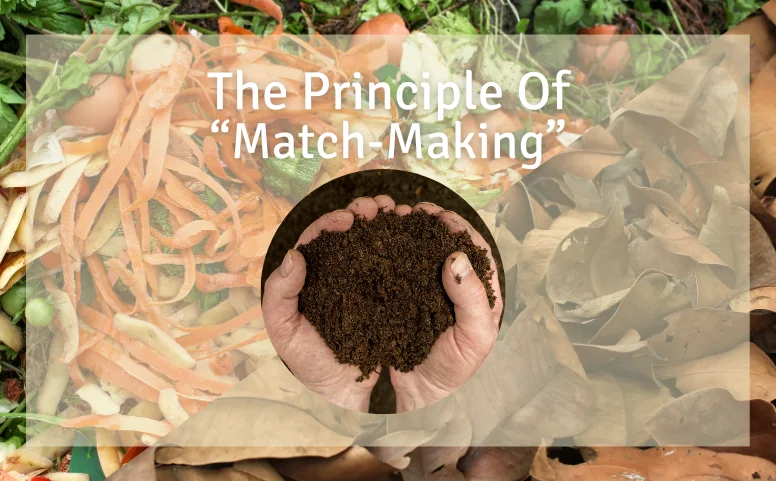
Principle of matchmaking:

Kitchen or wet waste, being nitrogen-rich, decomposes faster, leading to the growth of anaerobic bacteria and emitting bad odors. This anaerobic process also releases methane gas, a greenhouse gas contributing to global warming.

In contrast, dry leaves are carbon-rich and decompose more slowly.

The principle of matchmaking occurs when both nitrogen-rich and carbon-rich waste are mixed in appropriate proportions. This allows decomposition to happen under aerobic conditions. After a certain period of time, the waste is transformed into compost.

Does this mean that Dry leaves and Kitchen waste can be mixed together for composting?

Dry leaves and kitchen waste should be handled separately. While dry leaves are rich in carbon, they have low moisture absorption capacity. This can be observed in untreated dry leaves that linger around the city for extended periods without decomposing. On the other hand, areas where kitchen waste is dumped often emit strong odors, making them unpleasant and avoided by people.

Dry leaves have less moisture absorption capability because it is covered with a wax layer known as cuticle which does not absorb water. It acts as a waterproof barrier that prevents water from entering or escaping through the leaf surface. Due to this leaf cannot decompose on its own. Even with the absorbent material added it takes a longer time for decomposition.

Just as we buy a washing machine with specific requirements for washing powder, adding bar soap or other products not meant for it would be inappropriate. Similarly, combining kitchen waste and leaf waste in one OWC unit is not recommended. In fact the compost generated from treating the kitchen waste can be mixed with dry leave for treating the yard waste.

What are the optimal combinations of carbon and nitrogen waste?

  1. Landscape waste with SPT sludge
  2. Leaf waste with poultry manure
  3. Kitchen waste with cocopeat(with beneficial microbes)


How does composting reduces green house gas emissions – Comparative Analysis

GHG Emissions due to waste disposal 1

Have you ever wondered what happens to the waste collected from your household? Or have you considered the impact of disposing waste into landfills or feeding it to piggeries, which is a common practice for bulk food waste generators like industrial canteens, apartment complexes, food processing industries, and many more?

Let’s start by comparing the commonly practiced traditional method of organic waste treatment or disposal and its impact on greenhouse gas emissions. This, in turn, affects the soil, climate, and poses a threat to the human race.

Greenhouse Gas (GHG) generation by 1 ton of food waste daily using various methods of disposal / treatment:

  1. Disposal to landfill: Food Waste sent to landfill undergo long term slow decay over a period of 10-12 years. As per the Clean Development Mechanism (CDM) guidelines of calculation of GHG by sending MSW waste to landfill, every 1 ton of waste sent to landfill for 1 year (365 tons total), generates 2650 tons of GHG over a 10 year period. Sending food / canteen waste / household kitchen waste to landfills has long term impact to global warming by emission of GHG over extended period of time. 
  2. Disposal through piggeries: Food waste is categorised as calorie rich nitrogenous waste which can be used as food for pigs. As per estimates, each pig in its lifetime of 9 months consumes 1.8 tons of food and generates an estimated 3500 kg of GHG. From 1 ton of food waste, over 320 pigs can be fed each day which in its lifetime generates a whopping 970 tons of GHG in 9 months.
  3. Methane recovery through bio-methanation /anaerobic digestion (AD): AD is another process of treating food waste. However, AD as a process is useful only on the following conditions:
    • Scale of treatment should be more than 20 tons per day using sophisticated bio-gas setup which requires constant monitoring of various bio-chemical parameters and corrections to input materials based upon the reactions in the digester.
    • Bio-gas generated is utilized near the premises of generation. Botting of bio-gas under high pressure into cylinders consumes almost 70% of the energy equivalent that is put into a cylinder. So transporting bio-gas is not a sustainable option.
    • For every 1 ton of food waste, over 3 tons of nitrogen rich sludge is formed. There should be a process to treat this sludge and convert into non-toxic soil friendly format (i.e. composting of the sludge needs to be done)
    • For 1 ton of food waste treated through anaerobic digestion, approx. 200 cubic feet of biogas is produced. Out of this, 50% is methane and rest is CO2. However the utilisation of methane has to happen at source itself.
    • Since 3 tons of semi-liquid sludge is formed for every 1 ton of food waste, the cost of composting is 3 times higher as the absorbent (carbon rich material) required will be more to absorb the moisture.
  4. Aerobic Composting Process: The carbon dioxide (CO2) emissions associated with composting 1 ton (1,000 kilograms) of food waste using the aerobic composting method are relatively minimal compared to other waste management methods, such as landfilling. In aerobic composting, microorganisms break down organic matter in the presence of oxygen, converting it into stable organic matter or humus, while releasing CO2 as a byproduct of the microbial activity. The CO2 emissions from aerobic composting primarily result from the decomposition of the organic carbon in the food waste. The amount of CO2 emitted can vary depending on factors such as the composition of the food waste, temperature, moisture levels, and the duration of the composting process. However, as a general estimate, the carbon dioxide emissions from composting 1 ton of food waste are approximately equivalent to the carbon content of the food waste and the carbon rich material added to the composting pile.For every 1 ton of food waste, we are adding 100 kg of dry carbon material for composting. We can assume about 50kg of carbon present in the food waste coming from vegetable waste. So in total, 150 kg of carbon per 1000 kg of food waste treated. Carbon has an atomic weight of approximately 12 atomic mass units (AMU), and carbon dioxide (CO2) has an atomic weight of approximately 44 AMU. To calculate the amount of CO2 emitted:150kg of carbon × (44 AMU CO2 / 12 AMU C) = 550 kg of CO2So, composting 1 ton of food waste can generate approximately 550 kilograms (of carbon dioxide (CO2) emissions. It’s important to note that these emissions are considered biogenic and part of the natural carbon cycle since the carbon released during composting was originally derived from plants through photosynthesis. Composting remains an environmentally preferable option for managing food waste compared to landfilling, as it reduces methane emissions (a potent greenhouse gas) and produces valuable compost that can enhance soil fertility and carbon sequestration in the soil.Carbon Sequestration potential of compost:It is to be duly noted that only composting and a process and compost as the end product of the process has the potential to help in carbon sequestration and thereby helping in reversing climate change. The summary of the above claim is as follows:

    Compost is carbon rich material and when applied to soil increases beneficial microbes population in the soil. One such beneficial microbe is mycorrhiza which uses CO2 as raw material to produce complex carbon compound called “glomalin”. This carbon compound does not degenerate back into carbon di oxide and there by becomes part of the mass of the soil. Every hectare of land when treated with compost can sequester 2 metric tons of CO2 from the atmosphere annually.

    The above is the true potential of aerobic composting of waste and applying the compost generated to soil, which no other waste treatment process can provide.

How does composting of canteen food waste reduce GHG emissions?

GHG Emission Due to Insustrial Canteen Organic Waste

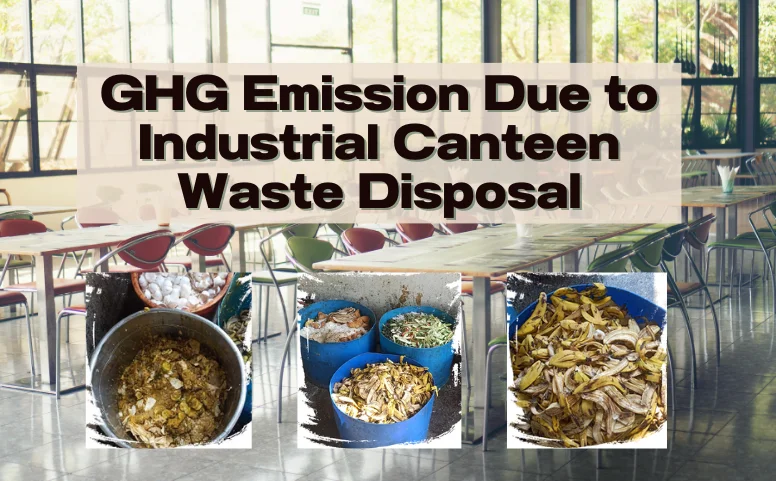
Canteen waste, often overlooked, adds to greenhouse gas (GHG) emissions whether it’s sent to landfills or used for feeding pigs. It’s important to recognize the environmental impact of canteen waste for better and more sustainable waste management.

Why Calculate GHG Emissions?

GHG emissions play a major role in climate change. Measuring emissions from canteen waste helps us understand its environmental impact and create better waste management strategies to reduce climate change effects.

How does feeding canteen food waste to pigs lead to GHG emissions?

To understand how feeding canteen food waste to pigs results in GHG emissions, we need to consider several factors: the collection and transportation of the waste, feeding it to pigs, and the overall impact on GHG emissions.

Key factors include:

  • Distance between the factory and pig farm
  • Daily GHG emissions from fuel used in transportation
  • Daily food consumption per pig
  • Lifetime methane emissions per pig
Scenario Data
Average distance from factory premises to piggery farm 40km to 60km
Fuel consumption for 1 tonner vehicle transporting waste with average 100 km run per day 10 liters of diesel
GHG emission per liters of diesel 2.68kg of GHG
Daily food consumption per pig 2kg to 3kg & slaughtered around 60kg-80kg
Amount of GHG emitted per pig in its lifetime 2.5 – 3.5 metric tonnes over a 9-month lifespan


Considering the above data let us now calculate the GHG emissions contributed per annum due to transport of 1 ton of canteen food waste to piggeries per day. From 1 ton of food waste, over 320 pigs can be fed each day which in its lifetime generates a whopping 960 tons of GHG in 9 months.

GHG Emissions due to piggeries per annum Data
GHG Emissions due to transporting of canteen food waste 9.782 ton
GHG Emissions of pigs (320 pigs) 960 metric ton
Total 970 metric ton


To obtain specific emission values for transportation and pig farm operations, it would be necessary to consider factors such as the type of vehicle used, fuel consumption. This estimate is based on the carbon content of diesel fuel and the standard carbon-to-CO2 conversion ratio. Other greenhouse gases, such as methane and nitrous oxide, may also be emitted during diesel combustion, but their quantities are generally lower compared to CO2 emissions.

The estimate of greenhouse gas (GHG) emissions from pig farming is based on data from,

Academic Research: Journals such as Livestock Science and Agricultural Systems.
Government Reports: Publications from the U.S. Environmental Protection Agency (EPA) and the European Commission.
International Organizations: Reports from the Food and Agriculture Organization (FAO) and the Intergovernmental Panel on Climate Change (IPCC), including FAO’s Livestock’s Long Shadow.
Industry Reports: Documents from organizations like the National Pork Board.
Environmental Impact Studies: Life cycle assessments and studies conducted by environmental consulting firms and universities.

These resources provide a range of methodologies and data, resulting in varying estimates of emissions from feed production, digestion, and manure management

The amount of greenhouse gases emitted by a pig during its lifecycle can vary depending on various factors such as its diet, management practices, and waste management systems. The amount of food waste required to feed a pig can vary depending on factors such as the pig’s size, age, and nutritional requirements. On average, a pig consumes around 2-4% of its body weight in feed per day. It’s worth noting that these estimates can vary and may depend on regional and production-specific circumstances.

What is the GHG emissions impact of disposing of canteen food waste in landfills?

Food / Canteen Waste sent to landfill undergo long term slow decay over a period of 10-12 years. As per the Clean Development Mechanism (CDM) guidelines of calculation of GHG by sending Municipal Solid Waste to landfill, every 1 ton of waste sent to landfill for 1 year (365 tons total), generates 2650 tons of GHG over a 1 year period. Sending food / canteen waste / household kitchen waste to landfills has long term impact to global warming by emission of GHG over extended period of time.

GHG Emissions due to land disposal of waste per annum Data
Total canteen food waste disposed into landfill per annum considering 1 ton per day 365 metric ton
GHG emissions from disposing of food waste in a landfill for a year 2650 metric ton


How much can GHG emissions be reduced through at-source composting?

To calculate the GHG savings from composting canteen food waste on-site, the following factors must be considered:

  • Canteen food waste is primarily nitrogen rich material which is mixed with carbon rich material and composted
  • Aerobic composting helps in nutrient recovery from the food waste and generates mostly CO2 and water vapour as by products
  • 166kg of carbon material is used to treat 1000kg of canteen waste. This carbon material decomposes and provides organic carbon to soil along with nutrients (N, P, K, Ca, Mg, Zn, Cu, Mn etc)
  • It is estimated that 1kg of food waste generates 550kg of CO2 during composting (60 days)
GHG Emissions due to composting per annum Data
Transporting of carbon material  536kg
CO2 emission during aerobic composting 200.75 metric ton
Total 201.29 metric ton
Savings in GHG Emissions due to composting  per annum 768.5 metric ton


During aerobic composting, microorganisms break down the organic matter in the presence of oxygen, primarily producing carbon dioxide (CO2) as a byproduct. Methane (CH4) emissions, which have a higher global warming potential than CO2, are typically minimal in aerobic composting due to the oxygen-rich conditions that inhibit methanogenic bacteria.

The exact amount of emissions can vary depending on composting methods, conditions, and the composition of the food waste. On average, composting food waste produces lower methane emissions compared to anaerobic decomposition in landfills.

In general, composting food waste is considered a more environmentally friendly option as it can reduce methane emissions from landfills and promote the production of nutrient-rich compost that can be used for soil improvement. However, quantifying the exact greenhouse gas savings would require a detailed analysis considering the specific circumstances and factors involved in both composting and pig farm operations.

It’s important to note that composting has additional environmental benefits beyond greenhouse gas mitigation, such as diverting waste from landfills, reducing odor and leachate production, and producing nutrient-rich compost that can be used to enhance soil health and fertility.

Estimates of greenhouse gas (GHG) emissions from 1 kilogram of food waste during decomposition are derived from:
Scientific Research: Journals like Waste Management and Journal of Environmental Quality.
Government Reports: Agencies such as the U.S. EPA and European Environment Agency (EEA).
International Organizations: FAO and IPCC reports.
Industry Reports: Publications from organizations like WRAP and environmental consulting firms.
Life Cycle Assessments (LCAs): Studies from universities and research institutions.
These sources provide data on methane and carbon dioxide emissions from various decomposition methods.

To learn more about the advantages of composting compared to biogas, please read the followinghttps://orbin.in/resources/compost-versus-biogas/

Carbon Sequestration potential of compost:

It is to be duly noted that only composting and a process and compost as the end product of the process has the potential to help in carbon sequestration and thereby helping in reversing climate change. The summary of the above claim is as follows:

Compost is carbon rich material and when applied to soil increases beneficial microbes population in the soil. One such beneficial microbe is mycorrhiza which uses CO2 as raw material to produce complex carbon compound called “glomalin”. This carbon compound does not degenerate back into carbon di oxide and there by becomes part of the mass of the soil. Every hectare of land when treated with compost can sequester 2 metric tons of CO2 from the atmosphere annually.

The above is the true potential of aerobic composting of waste and applying the compost generated to soil, which no other waste treatment process can provide.

Reference: Regenerative Organic Agriculture & Climate Change – Rodale Institute (https://rodaleinstitute.org/wp-content/uploads/rodale-white-paper.pdf)

Netflix Documentary: Kiss The Ground (https://kisstheground.com/)
How Composting is a solution to fight climate change

Composting is a eco-friendly solution for organic waste management to mitigate the effects of climate change

Soil is a living miracle. In one handful of soil there are more organisms than there are humans on earth and we are only beginning to understand the vast network of organisms right beneath our feet. We rely on healthy soil for 95% of what we eat, yet we take it granted.

Tilled, exposed, and eroded soils lead to the breakdown of soil aggregates, allowing formerly stable soil carbon to be released as a greenhouse gas (CO2) which in turn reduces the water retention capacity of soil and causes soil desertification and soil deforestation. As a result of which the soil will loose its fertility and potential to grow plants.

The soil desertification leads to serious consequences with the climate like since the atmospheric carbon is not put back in soil, too much carbon in the atmosphere causes the earth to overheat and excess carbon also causes acidifying oceans threatening marine life. In fact many of the world’s cultivated soil have lost more than 50% of original soil carbon.

We now know how to put back the carbon into soil where it belongs. Plants capture carbon dioxide in their leaf and pump the carbon down to the roots to feed hungry micro organisms living in the soil, now what have been atmospheric carbon, a “Problem“, becomes soil carbon, a “Solution“.

The solution to climate change is “Just below our feet“.

Crucial Role of Soil Carbon Enrichment

  • Carbon rich soils act like giant sponges, absorbs water during floods and provides it to plants in times of drought.
  • Fights climate change – Plants absorb carbon dioxide and pump the carbon fuel down to the roots, the mycorrhizal fungi a symbiotic association between plant roots and fungi stores breaks this carbon compound and stores it as stable form as organic carbon called glomalin locking the carbon in the soil.
  • Adding carbon to soil makes the land much more productive
  • Embrace the change with organic waste composting, a key player in cultivating healthy soil and securing our future well being

Composting A solution to fight climate change


How Composting is a solution to fight climate change?

Carbon Sequestration: Composting converts Organic waste into carbon rich material which when applied to soil increases the beneficial microbial population in the soil. These beneficial micro-organisms help in sequestration of carbon-di-oxide from the atmosphere and store in the soil in the form of complex carbon compounds.

Soil Regeneration: Compost enriches soil with organic matter, improving its structure, fertility, and moisture retention capacity. Healthy soils act as carbon sinks, absorbing and storing carbon dioxide from the atmosphere.

Soil nutrients: The nutrients present in the soil are in locked form, in a form which cannot be absorbed by plants, adding compost in the soil enables the beneficial microbes present in the compost to eat the soil nutrients, multiply and convert it into water soluble form for plants to absorb it and this process enables slow release of nutrients to plants.

Conservation of Landfill Space: Composting reduces the amount of organic waste sent to landfills, helping to conserve limited landfill space and extending their lifespan. This reduces the need for new landfill sites, which often contribute to deforestation and habitat destruction.

Energy Savings: Composting requires less energy compared to traditional waste disposal methods, such as incineration or landfilling, which involve transportation and processing. By reducing energy consumption, composting helps to lower greenhouse gas emissions associated with energy production.

Reduced Methane Emissions: By diverting organic waste from landfills, composting prevents the decomposition of organic matter in anaerobic conditions, thereby reducing methane emissions. Methane is a potent greenhouse gas with a much higher warming potential than carbon dioxide.

Overall, composting plays a crucial role in climate change mitigation efforts by reducing greenhouse gas emissions, sequestering carbon in the soil, and promoting sustainable waste management practices.

In a 10-year trial, fields with a crop rotation utilizing compost sequestered more than two metric tons of carbon (Mg C) per hectare per year, while the paired conventional farming system lost carbon.

If every country participates in the initiative to increase soil carbon by 0.4% annually, we could potentially store 75% of global annual greenhouse gas emissions. Enough to make a real difference to our planets future well being.

Store 75 percent of global green house gas emission by improving soil health by composting

Harvesting Compost – Made Simple and Easy

Whether you’re new to composting or have experience but faced challenges while harvesting the compost, we have you covered. In this blog, we’ll explain how harvesting compost from our Orbin ECO-OWC products is simple and easy.

We offer two types of composters with varying capacities and features:

  • Orbin™ SILO
  • Orbin™ STAX

In the Orbin™ Silo composter, one silo is filled completely with the kitchen waste before starting to fill the second silo. The compost in the Silo model is harvested all at once, emptying the entire silo. Each unit of the Silo yields one ton of compost per harvest.

Harvesting from the Silo is straightforward: simply remove the screws, open the sheet, and take out the compost, which will appear in a cake-like shape and then put the screws back in place

The Orbin™ Silo combines composting and curing in a single container, allowing for the complete harvest of compost from one silo in one go. To avoid maggots during the decomposition process, it is recommended to use a shredder with the Orbin Silo.

Orbin™ STAX composter on the other hand is designed to handle waste without shredding, the unit is fully enclosed, preventing maggots from escaping and ensuring they decompose within the system. Since the organic waste added to Orbin™ Stax isn’t shredded, an additional curing step is necessary to further break down the semi compost into fine particles. In this, the semi compost is removed from Orbin™ STAX and added into Orbin™ SILO for curing. Then finally the compost is harvested from Orbin™ SILO.

Choosing the right composter depends on your specific needs and preferences, but whether you go with the Orbin SILO or the Orbin STAX, both offer efficient and user-friendly solutions for turning waste into valuable compost. Start your composting journey today and contribute to a greener planet!

Harnessing the Power of Compost: Transforming Landscapes and Nurseries

Harness


Welcome to our blog post exploring the transformative power of compost in landscaping and nursery management. Composting, the process of decomposing organic matter into nutrient-rich soil, offers a sustainable solution for enhancing soil fertility, promoting plant health, and reducing environmental impact. Let’s delve into the myriad benefits and practical applications of,

  1. Benefits of Compost in landscape
  2. Benefits of Compost in nursery operations.

What are the benefits of Compost for Landscape?

  1. Restoration of Soil Fertility: Construction activities often deplete soil fertility. Application of compost replenishes lost nutrients, restoring the soil’s fertility.
  2. Increased Microbial Activity: Compost contains beneficial microbes that multiply in the soil. These microbes break down organic matter, releasing nutrients and improving soil structure.
  3. Nutrient Recycling: Compost brings back essential nutrients to the soil, ensuring plants have access to the elements necessary for growth. This nutrient recycling reduces the need for chemical fertilizers.
  4. Reduced Mortality Rate: The introduction of compost and its beneficial microbes can reduce the mortality rate of plants to zero by creating a healthier soil environment.
  5. Enhanced Water Retention: Compost acts like a sponge, improving the soil’s water retention capacity. This helps prevent water runoff, reduces erosion, and ensures plants have access to water during dry periods.
  6. Improved Soil Structure: Compost enhances soil structure by increasing its porosity and promoting better aeration. This creates an optimal environment for root growth and allows plant roots to access nutrients and water more effectively.
  7. Healthy Plant Growth: With improved fertility, water retention, and soil structure, compost fosters healthy plant growth in the landscape. Plants grown in compost-amended soil are often more vigorous, resilient to stress, and less susceptible to diseases
  8. Carbon Sequestration: Compost helps restore the carbon absorbed from carbon dioxide and locks it in the soil in complex carbon compounds, such as glomalin. Glomalin remains in the soil for decades, improving soil health and fighting climate change by reducing atmospheric carbon dioxide levels. This process, known as carbon sequestration, contributes to mitigating the effects of global warming.

What are the benefits of Compost for Nursery?

  1. Healthy Plant Growth: Compost, when mixed with soil at 20 percent volume, promotes healthy growth of plants in nurseries.
  2. Multiplication of Beneficial Microorganisms: Compost fosters the multiplication of beneficial microorganisms in the soil. These microbes support plant health by aiding in nutrient absorption and protecting against pathogens.
  3. Nutrient Breakdown: Compost breaks down complex nutrient compounds such as nitrogen (N), phosphorus (P), and potassium (K) into water-soluble forms, making them readily available to plants for uptake.
  4. Improved Water Retention: Compost helps retain water around plant roots, ensuring consistent moisture levels for healthy growth.
  5. Healthy Plants and Fruits: By providing essential nutrients and improving water retention, compost contributes to the growth of healthy plants and fruits in nurseries. Plants grown in compost-amended soil are often more vigorous and resilient, producing higher quality yields.
  6. Mulching: Applying compost as mulch around plants helps suppress weeds, retain soil moisture, and regulate soil temperature. Mulching with compost also adds organic matter to the soil as it decomposes, further enriching its fertility over time.

Composting offers a myriad of benefits for landscaping and nursery management, from improving soil fertility and plant health to reducing environmental impact and promoting sustainability. By harnessing the power of compost, landscapers and nurseries can create vibrant and resilient landscapes while minimizing their ecological footprint. Whether you’re a seasoned professional or a novice gardener, composting holds the key to unlocking the full potential of your landscape and nursery projects.

Ready to explore the possibilities of composting in your landscaping or nursery operations? Contact us today to learn more about composting solutions and resources tailored to your specific needs. Together, let’s cultivate healthier landscapes and nurseries.